Custom jewellery, Australia-wide
A lab-grown diamond, chosen for your piece.
Lab-grown diamonds are real diamonds made in a controlled setting. They have essentially the same chemical, physical and optical properties as natural diamonds, according to GIA. ENBOM DIAMONDS makes custom lab-grown diamond jewellery for clients in Australia, with 18ct gold as standard. We discuss your design online, provide an individual quote and include delivery in the price.
A photo, a link or a few words is enough to start.
Or message me on WhatsApp.
Every cut, from round to heart.
The classic shapes and the rarer ones in between. Send a photo of the cut you like.
-
Round brilliant
-
Oval
-
Emerald cut
-
Cushion
-
Marquise
-
Heart, pink
-
Princess
-
Radiant
-
Asscher
-
Pear, blue sapphire
-
Old mine
-
Emerald cut, emerald
-
Baguette
-
Kite
-
Hexagon
-
Half moon
-
Shield
Each loop shows the cut on a loose stone, as an illustration of the shape.
What is a lab-grown diamond?
A lab-grown diamond is made of diamond material. Its origin is what differs from a natural diamond: one grows in a controlled setting, while the other forms in the Earth. GIA says their chemical, physical and optical properties are essentially the same. That is why appearance alone cannot reliably establish a stone’s origin.
The distinction should be clear wherever a piece is described. The US Federal Trade Commission advises sellers to disclose when a diamond is laboratory-grown and to keep that disclosure close to the description. An independent report gives you a more useful answer than a photograph: it identifies the stone’s origin and records its graded characteristics. If you are comparing two stones online, ask to see the report for each one.
How is a lab-grown diamond graded and reported?
IGI’s laboratory-grown diamond report identifies the stone’s origin, shape, measurements and four grading factors: carat weight, colour, clarity and cut. Read the measurements alongside carat weight. Stones of equal weight can face up at different sizes; our guide to carat weight and visible size explains why.
At ENBOM DIAMONDS, a lab-grown stone of 1 ct or more comes with an individual IGI report. Smaller, side and pavé stones are not individually reported. Most of the lab-grown stones we use are VVS1 or VVS2 clarity; the grade of the stone offered for your piece belongs on its quote and report. You can follow our IGI report checklist before deciding. Natural diamonds are also available by request, subject to availability, and a natural stone of 0.5 ct or more comes with a GIA report.
What lab-grown diamond jewellery can I have made?
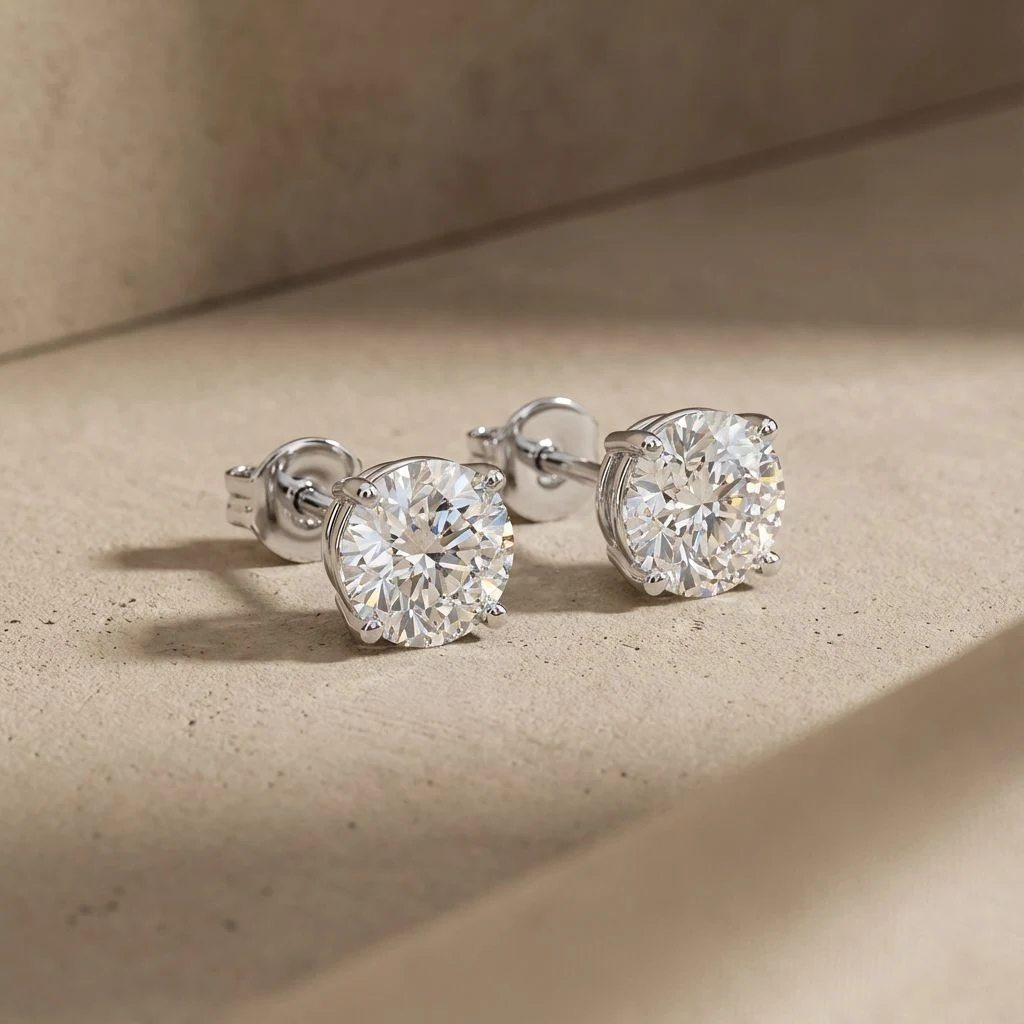
Start with the piece you want to wear: a ring, a pair of studs, a pendant or a bracelet. A photograph or an idea is enough to begin a conversation about a new custom piece, subject to what can be made. ENBOM DIAMONDS uses 18ct gold as standard; 14ct is available on request.
Our rings and earrings turn in 3D, so you can look at a setting and a stone shape from every side and try them in different gold and stones. They show design possibilities; the stone, metal and price for a new order are specified in its individual quote. If you are considering an engagement ring, the custom engagement rings page is a useful place to start.
How can I buy from Sydney, Melbourne or Perth without visiting a showroom?
Consultations are online. Whether you are searching for lab-grown diamonds in Sydney, Melbourne or Perth, you can send Ksenia Enbom a photo, link or description and discuss the design through WhatsApp, photographs or video. There is no ENBOM DIAMONDS showroom in Australia, so ask for the stone’s report, the piece’s specifications and a quote before you order.
The stones come from laboratories in China, and the jewellery is made by workshops there. Delivery to Australia is included in the price of the piece; from design approval to delivery, it takes 6 to 8 weeks. We carry the risk of loss or damage until delivery and will remake the piece or refund it in full if it is lost or damaged. Import duties and GST are included in the price too, so you pay nothing on delivery. The Australian import guide explains how those charges work.
What does lab-grown diamond jewellery cost?
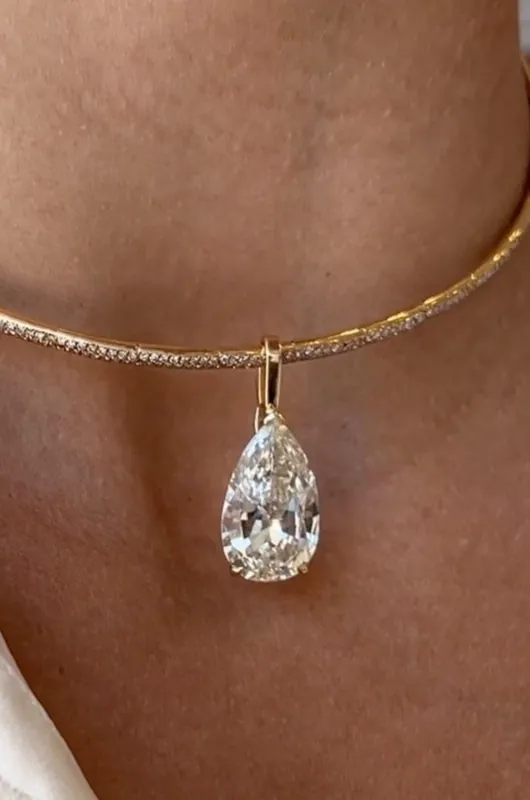
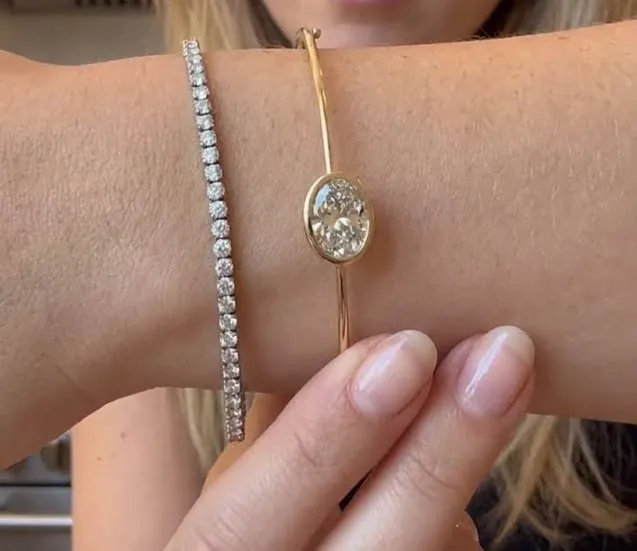
A custom price depends on the design and the stones and metal chosen for it. Two real past quotes show why a single price per carat would be misleading: a pendant with a 1-carat lab-grown pear-cut diamond in platinum and 18ct yellow gold was quoted at USD 950; a tennis bracelet with bezel-set stones totalling 2.76 carats was quoted at USD 3,150.
Those are US-dollar quotes for those particular pieces, not starting prices or estimates for a different order. They cannot tell you the cost of a ring or another pendant. The custom jewellery cost guide sets out what a quote covers. Send the reference you have in mind, along with any preferences you already know, to get a price for your piece.
Short answers.
Are lab-grown diamonds real?
Yes. GIA describes laboratory-grown and natural diamonds as having essentially the same chemical, physical and optical properties. Their origins differ, which is why the stone should always be identified as lab-grown in its description and report. GIA’s explanation covers how the two are formed and identified.
Do lab-grown diamonds test as diamonds?
Yes, because a lab-grown diamond is diamond material. An ordinary diamond tester may confirm the material without telling you whether the stone is lab-grown or natural. GIA explains that separating the two reliably requires more advanced testing. For a reported centre stone, check that the laboratory report identifies its origin.
Do lab-grown diamonds hold their value?
A lab-grown diamond may have resale value, but there is no guaranteed amount you will recover. An IGI grading report documents characteristics; it is not an appraisal. Independent analyst Edahn Golan’s wholesale price tracking found falling lab-grown diamond prices in 2025. Wholesale trends do not predict what someone will offer for your finished piece, so buy it for the jewellery you want to wear rather than an expected return.
Should I choose an IGI or GIA report?
For an ENBOM DIAMONDS lab-grown stone of 1 ct or more, the individual report is from IGI. IGI records detailed colour and clarity grades. GIA changed its assessment for lab-grown stones in 2025 to broader “Premium” and “Standard” categories. We use GIA reports for natural stones of 0.5 ct or more. Our IGI versus GIA guide explains the difference.
Write to Ksenia.
A photo, a link or a few words is enough to start.
Or message me on WhatsApp, email ksenia@enbom.diamonds, or find @enbom.diamonds on Instagram.